Ever wonder why some streets feel memorable the moment you turn onto them? In Wolflin, that feeling comes from more than attractive homes. It comes from a neighborhood plan, a mix of architectural styles, and streets lined with brick paving and mature elm trees. If you are drawn to established Amarillo neighborhoods with lasting character, Wolflin offers a clear example of how design and history still shape daily life. Let’s take a closer look.
What Makes Wolflin Distinct
Wolflin is not a one-style neighborhood frozen in a single decade. It is better understood as a layered historic district that grew through more than one important development period. The Wolflin Historic District was listed on the National Register in 1992, and its historic core reflects the 1923 Wolflin Place Addition and the 1927 Wolflin Estates expansion.
That history matters because it helps explain why the neighborhood feels cohesive without feeling repetitive. You can see common threads in the streetscape and lot patterns, but you also notice meaningful variety from block to block. For buyers and homeowners, that mix is often part of the appeal.
Wolflin’s Original Planning
One of Wolflin’s defining traits is how intentionally it was planned. Historical accounts describe brick paving, landscaped public spaces, and extensive elm planting as part of the original vision. That helps explain why the area still feels cultivated and park-like rather than purely functional.
SAH Archipedia notes that the neighborhood developed around automobile-era planning rather than streetcar service. In practical terms, that gave Wolflin room to develop with broader streets and a layout that feels residential in a deliberate way. Even today, the planning reads as part of the neighborhood’s personality.
Grid Streets and Curving Drives
Wolflin Place and Wolflin Estates were laid out differently, and that contrast is still visible. Wolflin Place follows a more rectangular grid, while Wolflin Estates introduces curving streets and Oldham Circle. As you move through the area, those design choices create slightly different rhythms from one section to another.
That does not make one part more important than another. It simply means the neighborhood offers different visual experiences within the same historic setting. For someone house hunting, that can be useful when narrowing down which streets feel most in line with your preferences.
Architecture Across the Neighborhood
Wolflin’s architecture is best described as a collection, not a single signature look. The National Register listing identifies Classical Revival, Bungalow/Craftsman, and Mission or Spanish Revival as broad style categories within the district. SAH also notes Spanish Colonial Revival, Tudor Revival, and early Moderne influences.
This blend gives the neighborhood much of its long-term appeal. Instead of seeing the same elevation repeated over and over, you see a range of forms, rooflines, materials, and details. That variety can make the neighborhood feel established, personal, and visually rich.
Revival Styles Still Stand Out
Several of Wolflin’s best-known homes reflect revival-era design. SAH highlights the Spanish Mediterranean-style William B. Stevenson House, Spanish-style homes, Tudor Revival examples on Hughes, and Spanish Colonial Revival homes around Oldham Circle and Southwest 30th Avenue.
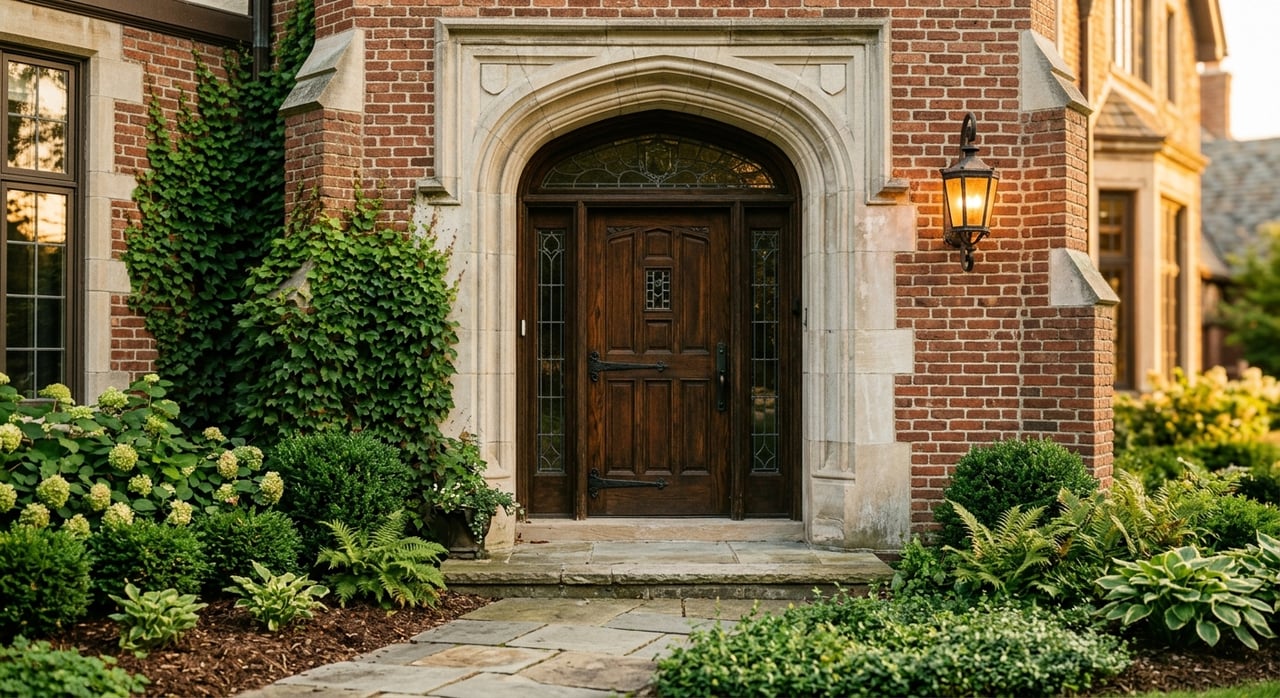
These homes help define the district’s classic image. Arched openings, textured exterior materials, steep gables, and traditional detailing all contribute to the sense that Wolflin has architectural depth. For homeowners who value craftsmanship and curb appeal, those details often matter as much as square footage.
Bungalows, Craftsmanship, and Early Modernism
Wolflin’s story is not limited to revival styles. Bungalow and Craftsman-era forms are also part of the district’s fabric, adding another layer to the neighborhood’s visual character. These homes contribute to the sense that Wolflin developed over time rather than all at once.
The area also includes an early Moderne presence. SAH describes the Philip Tauber House as the first modern house built in Amarillo, which shows that Wolflin made room for architectural change even during its earlier years. That coexistence of classic and modern design is part of what keeps the neighborhood interesting.
Streetscape That Shapes Daily Life
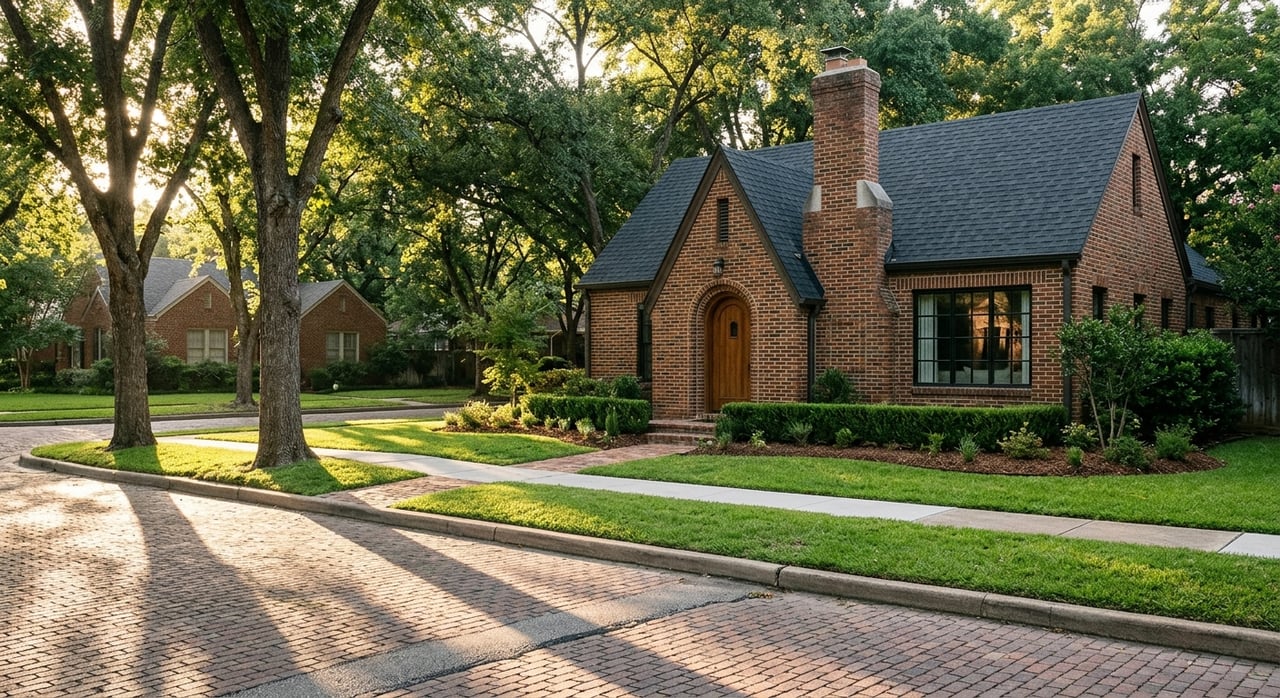
Architecture is only part of Wolflin’s appeal. The streets themselves play a major role in how the neighborhood feels. Brick streets and mature elm trees create a setting that is visually distinctive and noticeably different from newer subdivisions.
SAH notes that Wolflin Place and Wolflin Estates are unified by avenues of Siberian elm trees. Arts in Amarillo also describes the area as an older, established part of the city with large elm trees and wide brick streets. Together, those features give the neighborhood a lived-in and carefully shaped atmosphere.
Why the Tree Canopy Matters
A mature canopy changes how a neighborhood is experienced. It softens the scale of the streets, frames the homes, and adds seasonal texture to everyday views. In Wolflin, the trees are not just landscaping. They are part of the original neighborhood identity.
That matters for both buyers and owners. When a neighborhood’s visual character comes from lasting elements like street layout, paving, and tree cover, its appeal often feels more durable than trend-based design alone.
Civic and Retail Anchors Nearby
Wolflin also benefits from being connected to everyday destinations and cultural institutions. Arts in Amarillo notes that the Wolflin and Georgia area includes the Amarillo College Washington campus, the Amarillo Museum of Art, and the Amarillo Little Theatre. Those places help give the area a residential feel with broader city connections.
For shopping and daily errands, Wolflin Village and Wolflin Square serve as important nearby retail nodes. Visit Amarillo describes Wolflin Village as a major shopping destination in the Panhandle and notes Wolflin Square as home to many local boutiques and specialty stores. Wolflin Square’s merchant mix also includes health and wellness, services, beauty, food, and specialty retail.
Convenience With Established Character
That combination can be hard to find. You get a historic residential setting, but you are not isolated from daily-use shopping or cultural destinations. For many buyers, that balance adds practical value to the neighborhood experience.
It also supports Wolflin’s identity as more than a collection of older homes. The area functions as part of a broader, active section of Amarillo, with both neighborhood texture and city access.
How Wolflin Continues to Evolve
A neighborhood with history does not have to stand still. City of Amarillo permit records show continued work in Wolflin Place and Wolflin Estates in 2025, including window replacement on South Ong and South Hughes, an interior remodel on South Hayden, a roof replacement on South Lipscomb, and a new pool-house permit in Wolflin Estates.
Those records suggest steady reinvestment rather than wholesale change. They point to owners maintaining and improving existing homes while preserving the overall street character that draws people to the area in the first place.
New Construction Has a Limited Role
City permit files also show that selective new single-family construction has occurred in the broader Wolflin area, including a home in Wolflin Estates in 2015 and one in Wolflin Place Amended in 2017. That is useful context because it shows the neighborhood can absorb some new building without losing its identity.
In Wolflin, the bigger story is stewardship. Updates, remodeling, and carefully scaled improvements appear to be shaping the neighborhood’s future more than large-scale replacement. For buyers and sellers alike, that can be an encouraging sign of long-term stability in character.
What Buyers and Sellers Should Notice
If you are buying in Wolflin, look beyond style labels and focus on the full setting. Street pattern, lot placement, tree coverage, architectural integrity, and renovation history all influence how a property lives and how it may be perceived over time. In a neighborhood like this, context matters.
If you are selling, Wolflin’s value story usually depends on more than square footage and finish selections. Buyers often respond to the relationship between the house and the street, the condition of original features, and the way updates fit the home’s overall design. Accurate positioning starts with understanding those details.
That is where appraisal-informed guidance can make a difference. In an established neighborhood with varied architecture and layered improvements, careful evaluation is often more useful than broad averages or surface-level comparisons.
If you are thinking about buying or selling in Wolflin, working with a local team that understands architecture, condition, and neighborhood context can help you make a more confident move. Connect with JBRE Brokerage for thoughtful guidance rooted in Amarillo market knowledge.
FAQs
What architectural styles are found in Wolflin?
- Wolflin includes Classical Revival, Bungalow or Craftsman, Mission or Spanish Revival, Spanish Colonial Revival, Tudor Revival, and early Moderne influences.
What makes Wolflin’s streets feel different from newer neighborhoods?
- Wolflin’s character comes from its original planning, including brick paving, landscaped public spaces, curving streets in parts of the district, and mature elm-lined avenues.
What is the difference between Wolflin Place and Wolflin Estates?
- Wolflin Place follows a more rectangular grid, while Wolflin Estates introduced curving streets and Oldham Circle, creating a different street pattern within the same historic neighborhood.
Is Wolflin a historic district in Amarillo?
- Yes. The Wolflin Historic District was listed on the National Register in 1992.
Is Wolflin still seeing updates and reinvestment?
- Yes. City of Amarillo permit records show recent work such as window replacement, interior remodeling, roof replacement, and a new pool-house permit, which suggests continued reinvestment in the neighborhood.